Zebra Trees and Boundary Lines: Hope Springs Imaginal
An Arts Afield Project
MacLeish Field Station, Smith College
Opening on 10/17/26 with a tour at 1:30p and a reception and panel discussion at 3:30p. All are welcome!
-
Approximately 12’ x 15’ x 5’, paint, acrylic marker, wood, chrome plated steel, upcycled wood, aluminum and acrylic
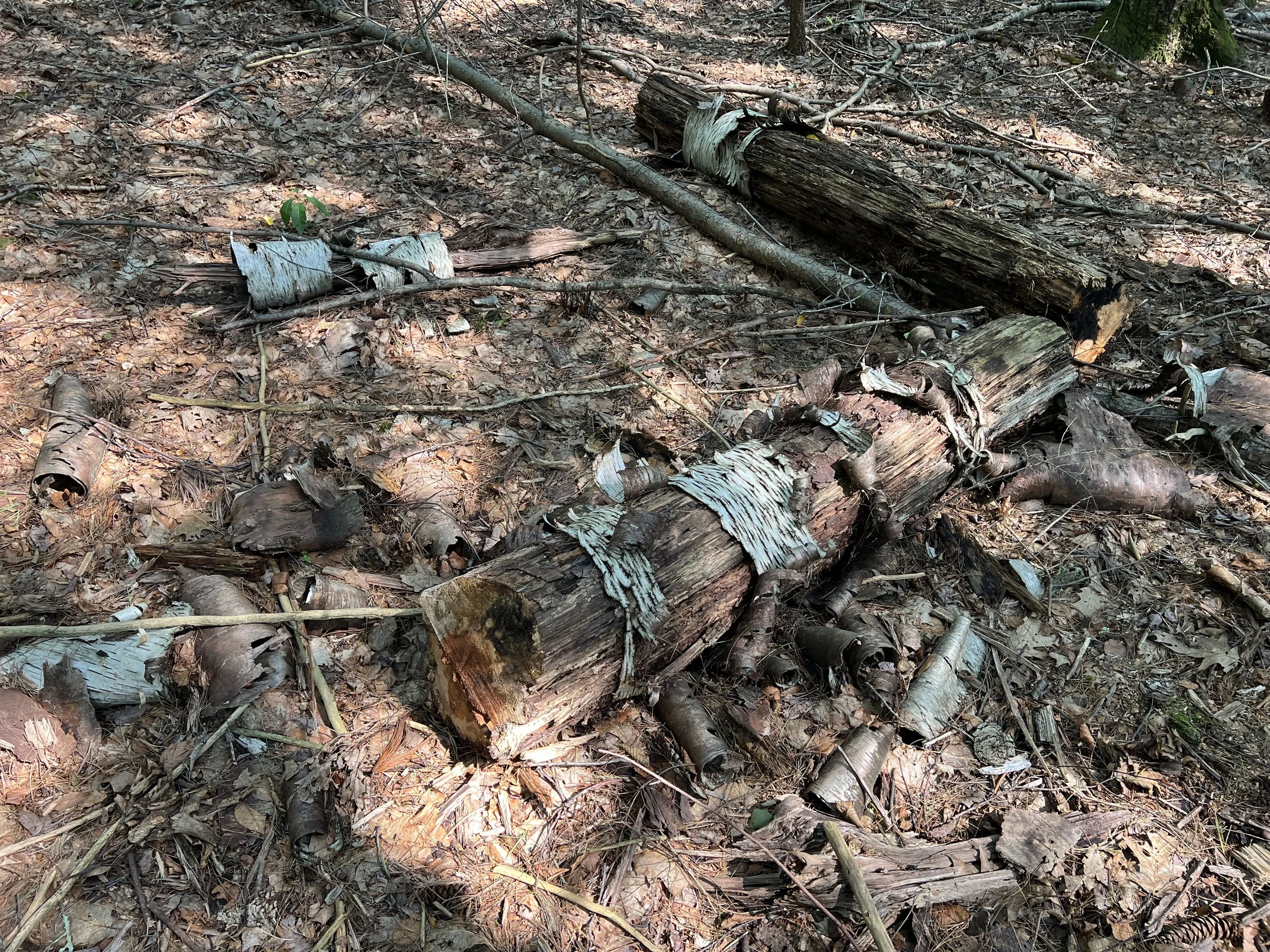
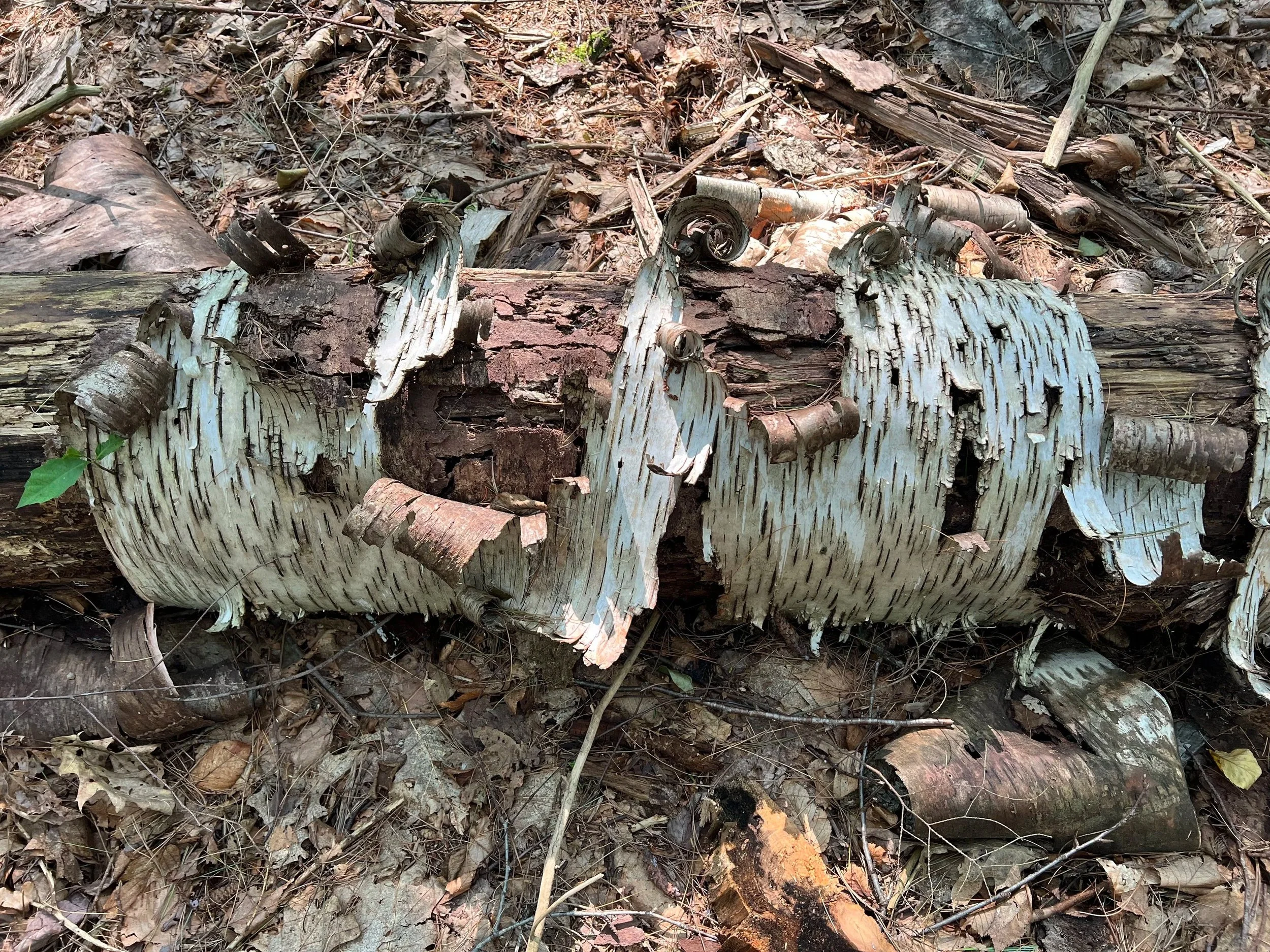
Zebra Trees and Boundary Lines: Hope Springs Imaginal grew out of a relationship between Leduc and a decomposing birch in Hubbard Brook Experimental Forest in 2021. Three years later, Leduc encountered a rhyming “Zebra Tree” at MacLeish Field Station and has since witnessed the falling and ongoing decomposition of Zebra Trees across geographic designations. As the trees alter their states, they mentor Leduc with measured wisdom regarding scales of reliability, experiences of liminality, and black-and-white, linear constructs.
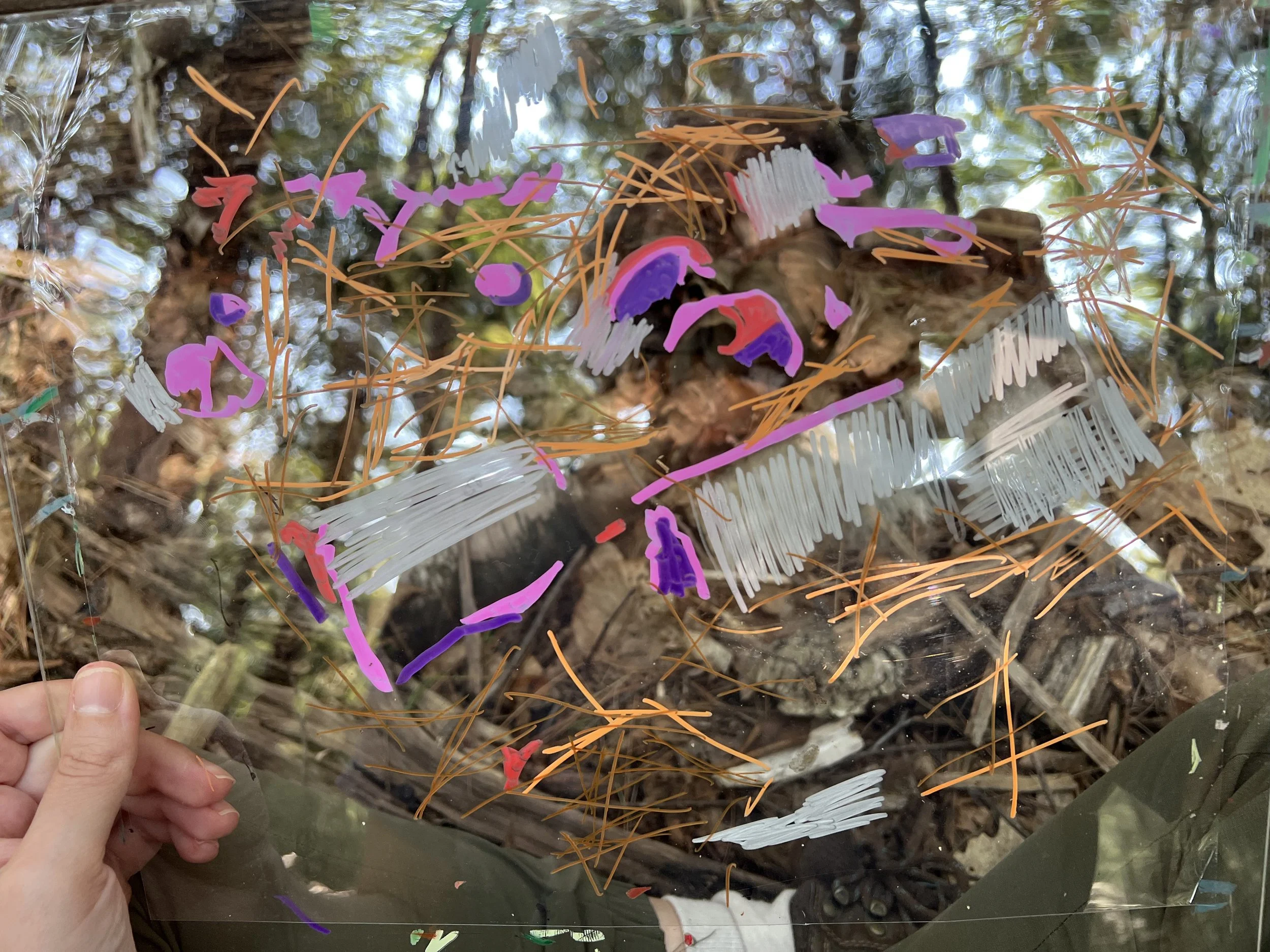
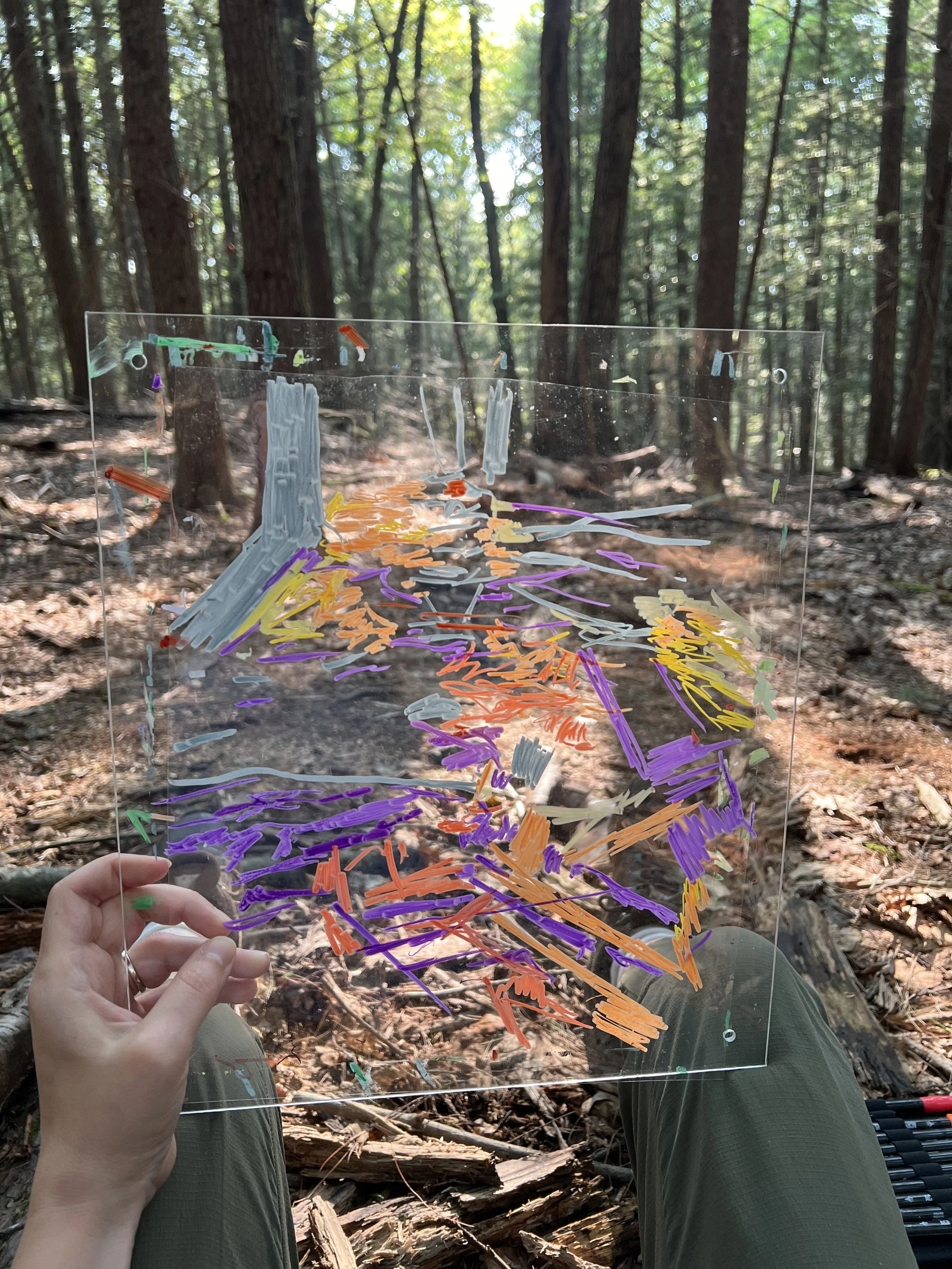
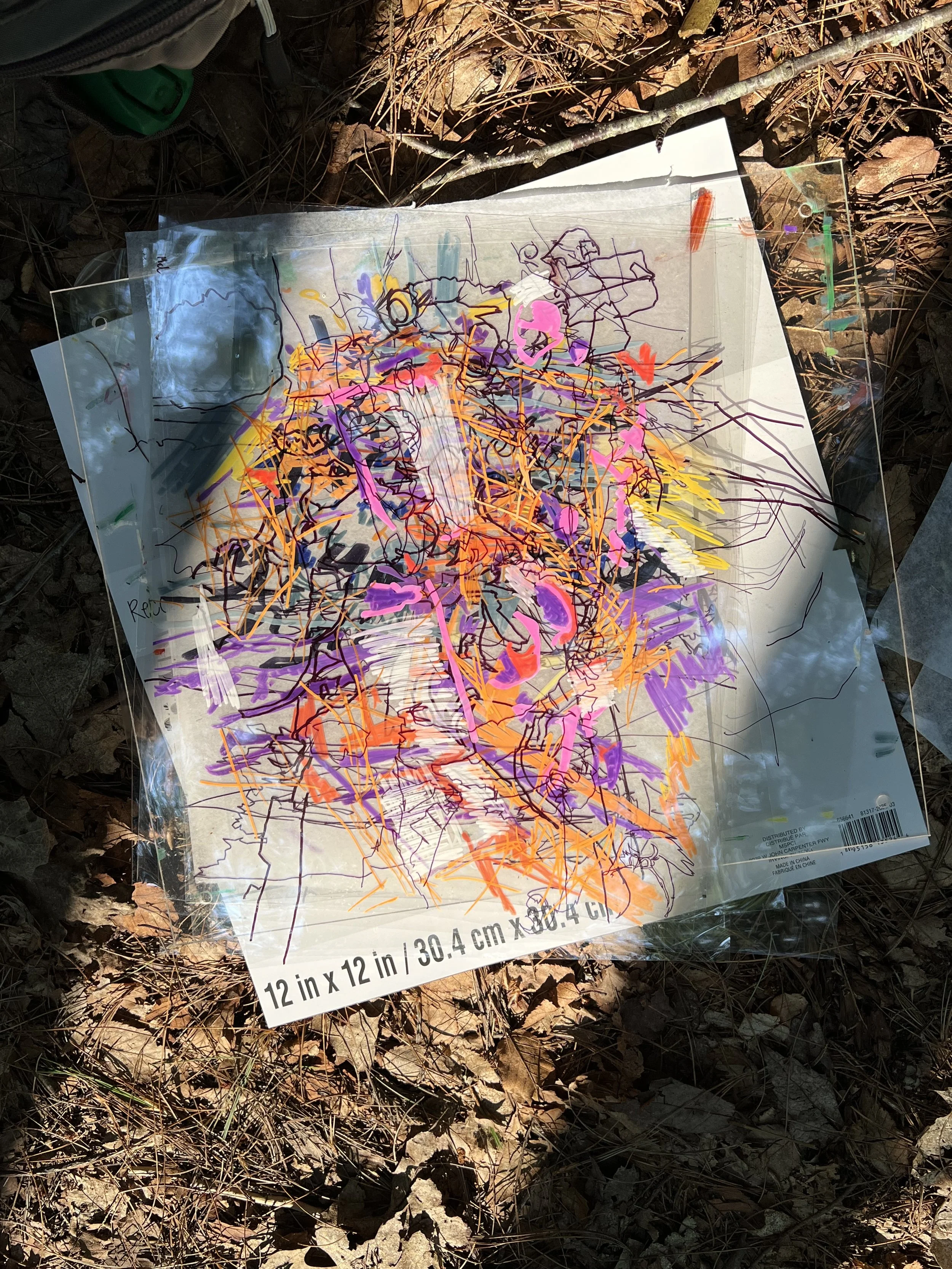
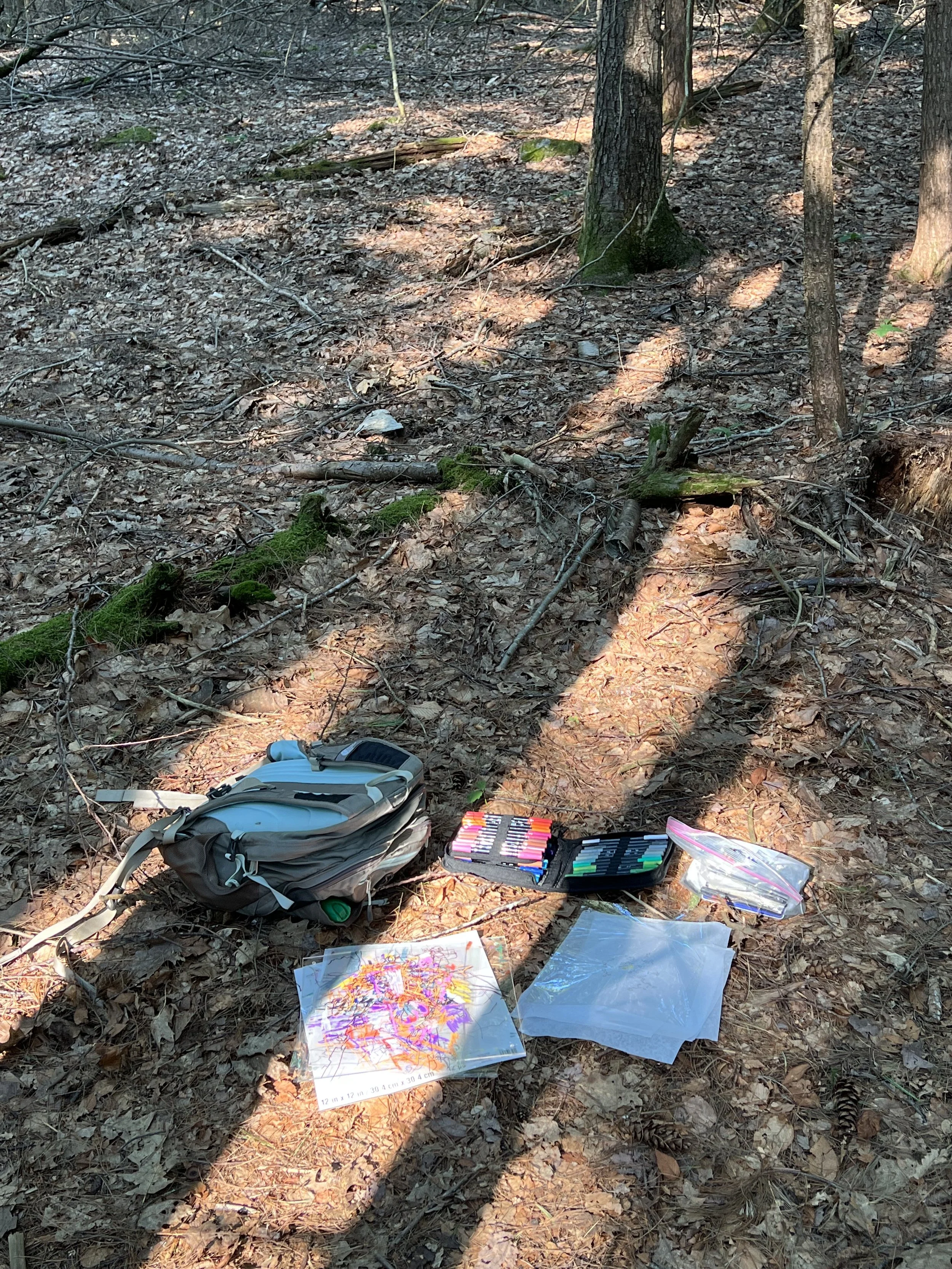
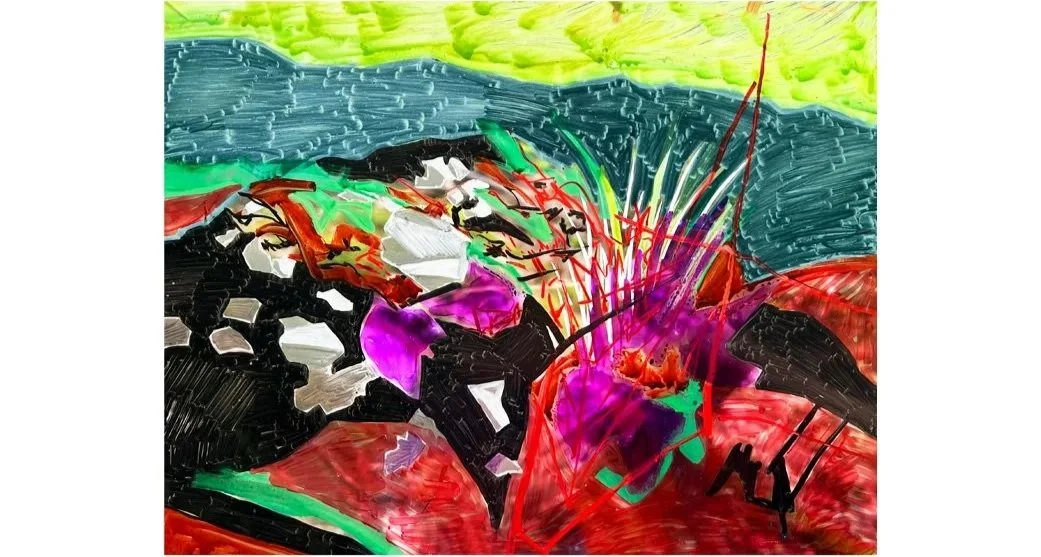
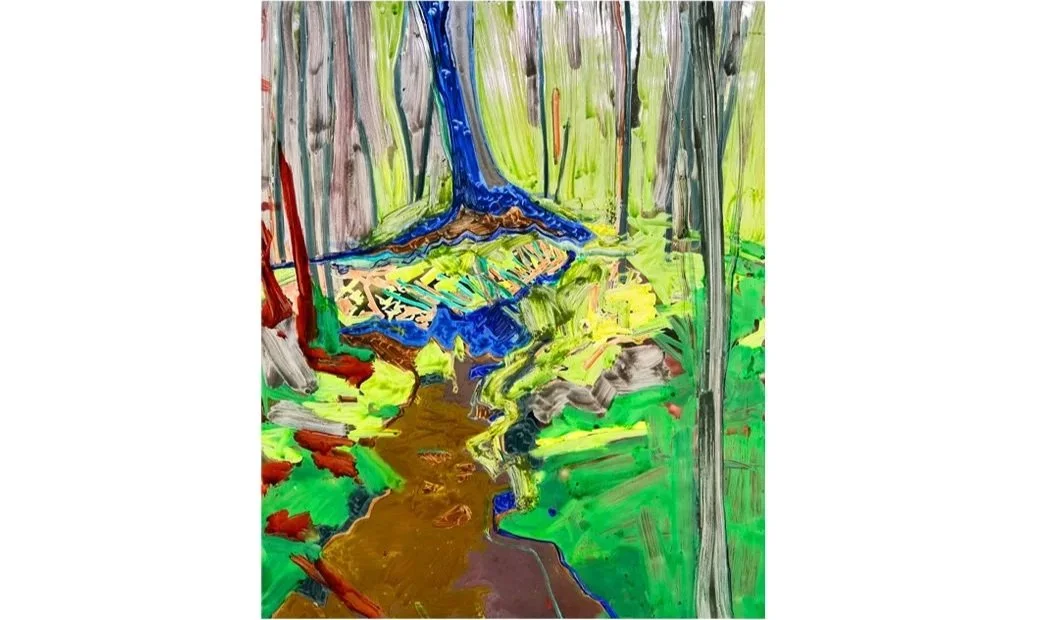
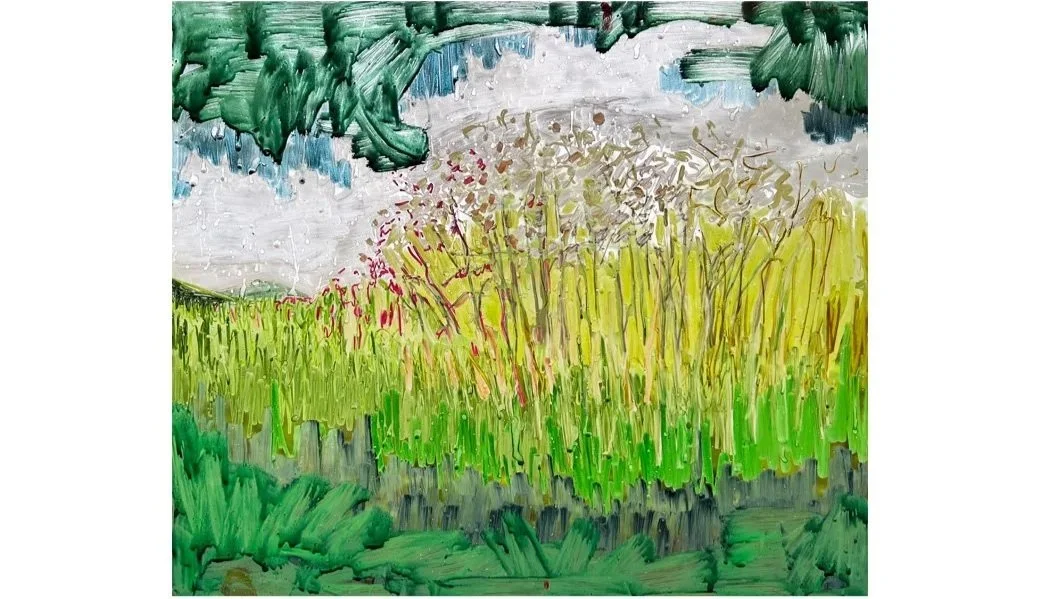
Visitors are welcome to embody a state of non-dual dynamism by walking on the logs, an echo of the piece’s positioning along the crest of two watersheds (and the orientation of all living entities). From the logs, framed, plein air artifacts of the artist’s acquaintance with four locations within MacLeish reach out and up physically and energetically. Their color, gesture, transparency, and reflection represent—and invite others into—playful moments of porosity and participation with and as an ever-expanding, relational whole.
To view Zebra Tree research documentation and ongoing artwork, please follow this link to “The Zebra Tree.”
For additional concepts behind the “plein air artifacts,” please follow this link to “Field Marks.”
BOUNDLESS ENGAGEMENT
If additional inspiration is helpful, please see the drop-downs below which correspond to select components within the piece. These include Experience Mapping prompts composed in collaboration with eco-psychology professor, Dr. Michele Wick.
Please note that you are encouraged to reflect wherever you feel most comfortable, be it physically with the artwork or elsewhere. Similarly, engagement modalities are equally open: movement, imagery, music, writing, conversation, thought, sensation…all are worthy means of contemplation and expression.
***For anyone interested in facilitating a specific engagement, please reach out to Rita directly here.***
-
An exploration from Dr. Michele Wick
To begin, we will take an account of your sensory and emotional intersection with the installation and forest as a whole.
Sensory accounting:
In the presence of Zebra Trees and Boundary Lines, record the sights, sounds, smells, and textures in the area around you. (“Recording” can be with thoughts, words, photos, drawings, etc.)
Emotional accounting:
What emotions do you feel in the presence of Zebra Trees and Boundary Lines? If you’re having trouble naming your feelings, click here for a list.
Please continue to the prompts next to each image below; we will return to the whole at the very end. However, should you prefer not to complete the exercise linearly, that is okay! You are welcome to start and stop wherever you prefer.
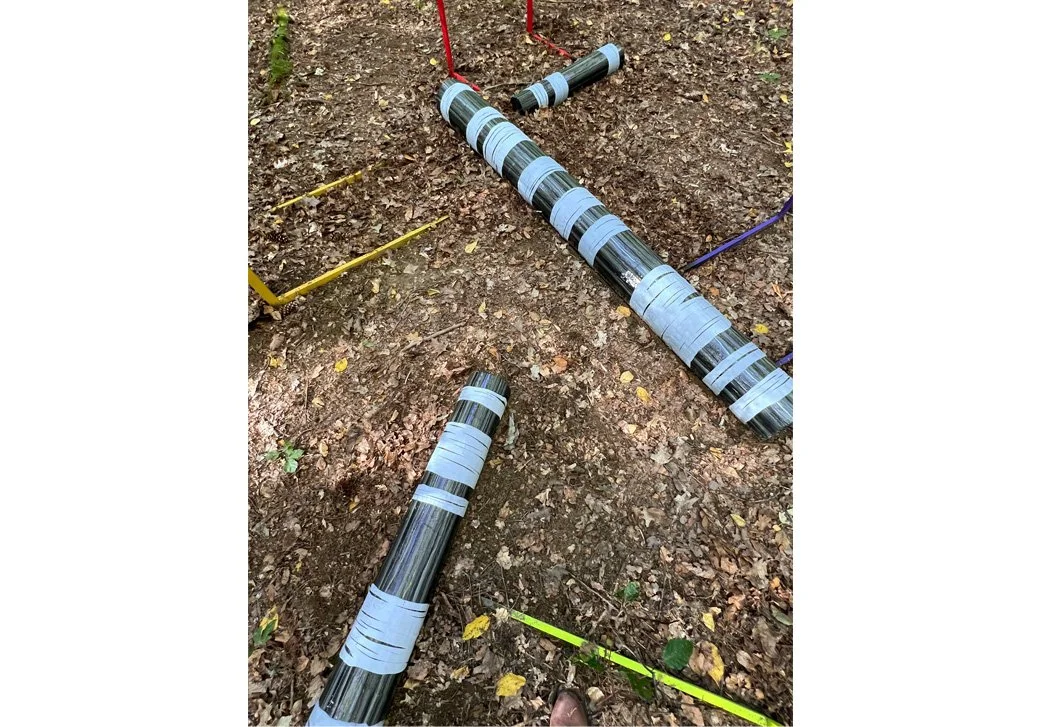
ZEBRA TREES
-
-
Striking, Illusory Patterns; Grief and the Magic of Dissolution
-
Please check back next week for Dr. Wick’s upcoming prompts!
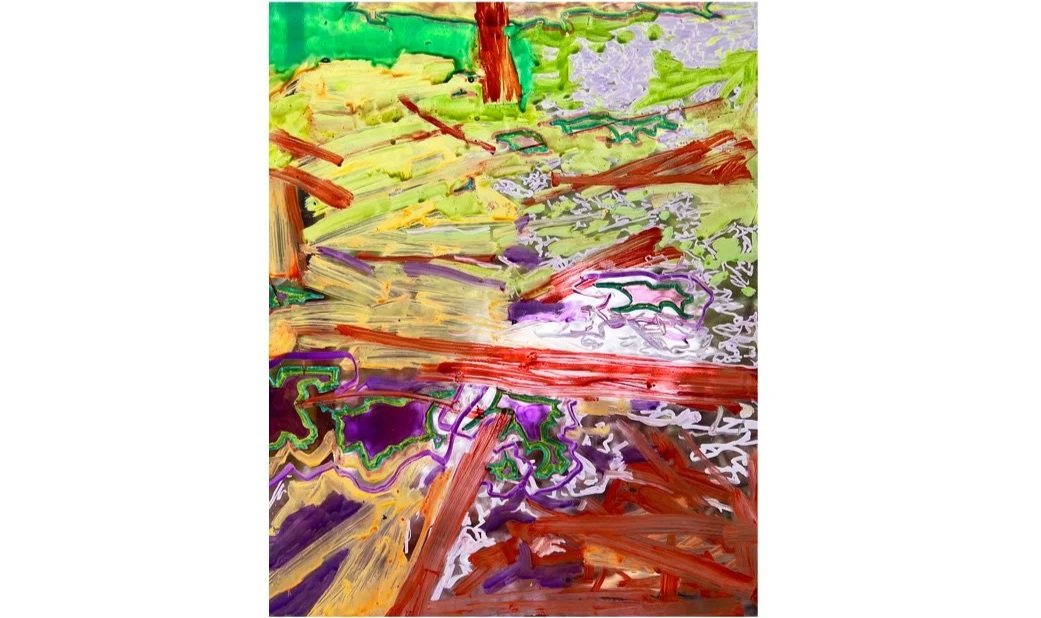
VERNAL POOL
-
-
Reflected Light on Temporal Water; Push and Pull of the Unseen
-
Please check back next week for Dr. Wick’s upcoming prompts!
GHOST PIPE ENCLAVE
-
-
Gusting, Rustling Wind; Emergence of the Unexpected
-
EXPERIENCE MAPPING PROMPT
MOSSY STREAM
-
-
Sparkling, Trickling Water; Fluidity and an undercurrent of Being Held
-
Please check back next week for Dr. Wick’s upcoming prompts!
CHESTNUT GROVE
-
-
A Textured, Ecotonal Threshold; Perpetual Dynamism and Scales of Transitions
-
Please check back next week for Dr. Wick’s upcoming prompts!
-
Sensory Mapping:
Refer back to your initial sensory account as well as any additional sensory information you collected as you moved throughout the piece. On a piece of paper (any size), diagram the sensory information you noticed. (You may use any medium of your choice, e.g. pencil, paint, marker, pen, photography, etc.)
Emotional Mapping:
Refer back to your initial emotional account as well as any additional emotional information you collected along the way. Consider adding these emotions to your sensory map. How will you notate them?
Take a moment to reflect. Notice how your sensory experiences and emotions connect. Can you find any surprises?
How to Arrive
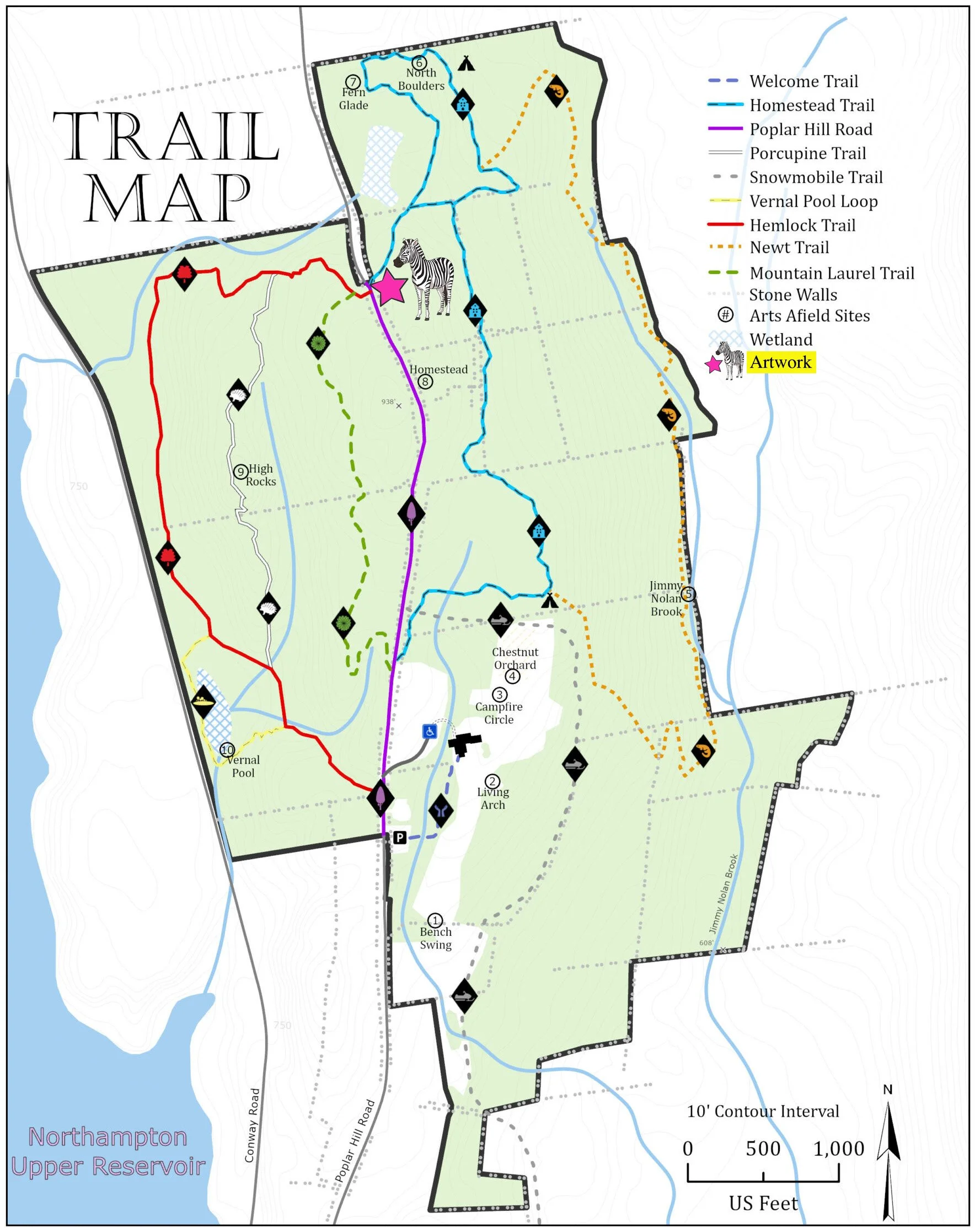
The Smith Collage Ada and Archibald MacLeish Field Station, 80 Poplar Hill Road, Deerfield, MA 01373
To access Zebra Trees and Boundary Lines: Hope Springs Imaginal, park in MacLeish’s main lot and take the (wide, well maintained) Poplar Trail all the way to the end (just over half a mile).
As you walk, you are invited to notice the difference between your right and left (East and West) sides: two separate watersheds which result in ecological moments that can be quite distinct.
In addition to being situated on this crest, the installation is at a nexus point where the Homestead, Hemlock, and Mountain Laurel Trails somewhat intersect. You are encouraged to explore any number of MacLeish’s possible pathways—as well as your own pathways of possibility.